introduction
If you’ve ever felt overwhelmed scrolling through zero-waste Instagram accounts and wondered how to start living sustainably as a beginner without turning your life upside down, you’re not alone. The good news? Sustainable living isn’t an all-or-nothing club. It’s a series of small, doable swaps that add up and you can start today, wherever you are.
This guide breaks down exactly how to start living sustainably as a beginner in 10 manageable steps, based on what actually works (and what doesn’t) in real life.
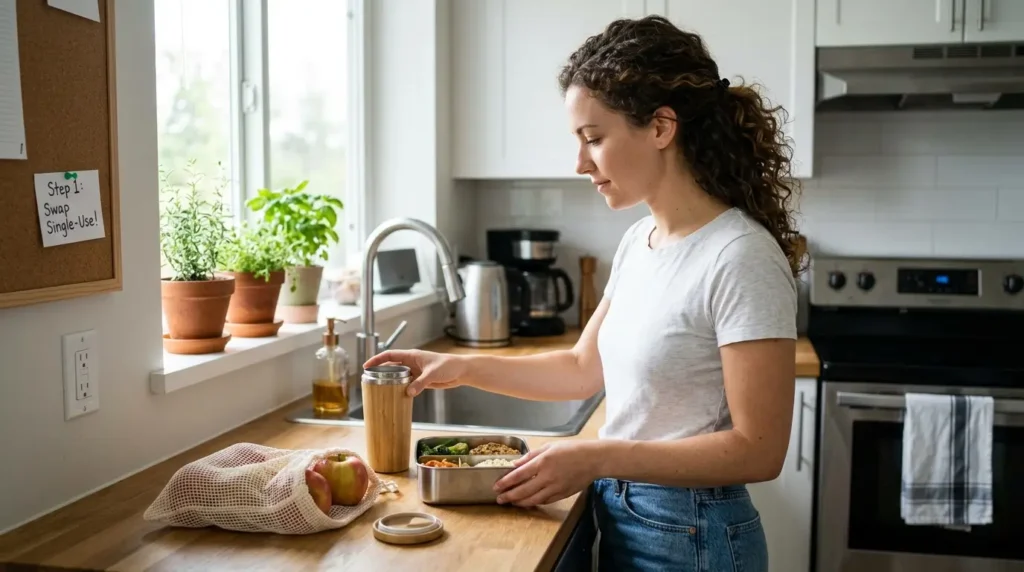
Step 1: Audit Your Current Habits
Before changing anything, take stock. Spend a week noticing:
- How much food you throw away
- How many single-use items you go through (cups, bags, wrappers)
- What you’re spending on impulse buys
This simple audit gives you a baseline and shows you exactly where a beginner’s guide to sustainable living can have the biggest impact for your lifestyle.
Step 2: Start With the Kitchen (Food Waste & Plastic)
The kitchen is ground zero for waste and the easiest place to see fast results.
| Disposable Item | Reusable Swap | Approx. Cost | Payback Time |
|---|---|---|---|
| Paper towels | Cloth rags/towels | $10–15 | ~1 month |
| Plastic wrap | Beeswax wraps | $15–20 | ~2 months |
| Single-use water bottles | Reusable bottle | $15–25 | ~1 month |
| Plastic sandwich bags | Silicone bags | $12–18 | ~3 months |
The USDA estimates that a large share of the U.S. food supply up to 30–40% is wasted each year, so even basic meal planning can meaningfully cut your footprint and grocery bill at the same time.
Step 3: Master the Basics of Recycling & Composting
Here’s an uncomfortable truth: not everything you toss in the recycling bin actually gets recycled. Contaminated items (greasy pizza boxes, unrinsed containers) often end up in the landfill anyway a problem experts call “wishcycling.” Check your local municipality’s guidelines rather than guessing.
Composting is fantastic in theory, but honestly, a first attempt at a compost bin can easily turn into a smelly, fruit-fly-attracting mess within two weeks. The fix is simple once you know it: balance “greens” (food scraps) with “browns” (dry leaves, cardboard) and keep it aerated. If a full bin feels like too much, countertop compost services or a simple worm bin are easier beginner entry points.
Step 4: Reduce Single-Use Plastics Room by Room
- Bathroom: shampoo bars, bamboo toothbrushes, safety razors
- Kitchen: bulk bin shopping, glass storage jars
- On-the-go: collapsible cups, reusable utensil kits, tote bags
Pick one room at a time trying to overhaul your whole home in a weekend is a fast track to burnout (more on that in Step 10).
Step 5: Rethink Your Shopping Habits (Buy Less, Buy Better)
Of all the sustainable habits worth trying, thrifting is the one most likely to stick long-term and it’s easier than most people expect. Secondhand shopping used to mean digging through disorganized racks for hours, but many thrift and consignment stores now sort by size and style, and apps like ThredUp or Poshmark make it just as convenient as regular online shopping.
Quick decision framework before buying:
- Do I already own something similar?
- Will I use this at least 30 times?
- Can I find it secondhand first?
If you answer “no” to #1 and #3, it might be a genuine need.
Step 6: Cut Home Energy & Water Waste
| Action | Cost | Impact | Effort |
|---|---|---|---|
| LED bulbs | Low | Medium | Low |
| Low-flow showerhead | Low | Medium | Low |
| Smart thermostat | Medium | High | Medium |
| Solar panels | High | High | High |
According to the U.S. Department of Energy, LED bulbs use significantly less energy than incandescent lighting up to 75% less making them a low-effort, high-payoff place to start.
Step 7: Choose Sustainable Transportation Options
- Walking/biking: best for short, urban trips
- Public transit: ideal if you commute regularly
- Carpooling: great middle ground for suburban/rural areas
- EVs or hybrids: worth it for high-mileage drivers
There’s no single “right” answer pick what realistically fits your daily routine.
Step 8: Build a Capsule, Eco-Conscious Wardrobe
Fast fashion is one of the most resource-intensive industries globally. A capsule wardrobe a smaller set of versatile, quality pieces naturally reduces both waste and clutter. Combine this with the thrifting habit from Step 5, and prioritize natural fibers (cotton, linen, wool) over synthetic blends that shed microplastics in the wash.
Step 9: Support Sustainable Brands & Local Businesses
Not every brand claiming to be “eco-friendly” actually is. Watch for these greenwashing red flags:
- Vague terms like “natural” with no certification
- No transparency about supply chains or materials
- Marketing that focuses more on packaging than substance
Look instead for third-party certifications (Fair Trade, B Corp, GOTS) and prioritize local businesses when possible — it cuts transportation emissions and supports your community.
Step 10: Make It a Habit, Not a Phase
The “zero waste” goal that gets so much attention online is often overhyped and unrealistic for most beginners. Chasing a mason-jar-of-trash-per-year ideal can create guilt and burnout fast. A more sustainable approach (pun intended) is tracking progress loosely, celebrating small wins, and accepting imperfection. Progress beats perfection every time.
Common Beginner Mistakes to Avoid
- Trying to change everything at once
- Buying “eco” products you don’t actually need
- Giving up after one setback (like a messy compost bin)
- Chasing zero waste instead of less waste
- Ignoring local recycling rules
Frequently Asked Questions
What is the easiest way to start living sustainably as a beginner?
Start with one small area like reducing single-use plastics in your kitchen rather than overhauling everything at once.
Is composting necessary for sustainable living?
No. It helps, but it’s optional. If it doesn’t fit your space or lifestyle, focus on other swaps first.
How much does it cost to live sustainably?
Many swaps (thrifting, using less, DIY cleaning) actually save money. Others (solar panels, EVs) are optional, higher-cost upgrades.
Do I need to go zero waste to make a difference?
Not at all reducing waste meaningfully matters more than reaching zero.
What’s the best sustainable habit for beginners?
Habits with low effort and high impact, like reusable bags/bottles or meal planning, tend to stick best.
Conclusion
Learning how to start living sustainably as a beginner isn’t about perfection it’s about consistent, small choices that compound over time. Pick one step from this list, try it for a month, and build from there.
Looking for more? Check out our related guides on Cheap Eco Swaps and Bathroom Waste Reduction for more beginner-friendly tips.
Sustainable Living Tips for Beginners: 20 Easy Habits to Start Today
SUSTAINABLE LIVING FOR BEGINNERS: 10 WAYS TO EASE INTO IT
Figuring out how to start living sustainably as a beginner rarely looks like the curated feeds that make it seem effortless. It looks messier than that a compost bin that goes wrong before it goes right, a reusable bag left in the car three times before it finally makes it into the grocery store, a closet that takes months, not a weekend, to shift toward secondhand. That’s not failure. That’s what building a habit actually looks like.
The ten steps in this guide aren’t a checklist to complete in order or all at once. They’re a menu. Maybe you start in the kitchen because food waste is the easiest thing to see and fix. Maybe you start with your closet because thrifting sounds more fun than composting. Either entry point works, because the goal was never to become a “sustainable person” overnight it’s to make one choice today that’s a little better than the choice you’d have made without thinking about it.
It’s worth repeating what the zero-waste movement often gets wrong: perfection isn’t the point, and chasing it is often what causes people to quit. A single reusable water bottle, used consistently for a year, does more good than a fully stocked zero-waste kitchen that gets abandoned after a month of guilt and burnout. Consistency beats intensity almost every time not just in sustainability, but in any habit worth keeping.
If you’re not sure where to begin, go back to Step 1. Spend a week just noticing what you throw away, what you buy on impulse, what’s sitting unused in your closet. That audit alone will usually point you toward the one or two swaps that would matter most for your specific life, which is far more useful than copying someone else’s routine.