introduction
sustainable living tips for beginner If you’ve ever felt overwhelmed scrolling past zero-waste influencers with their perfectly curated mason-jar pantries, you’re not alone. The truth is, sustainable living tips for beginners don’t need to involve a total lifestyle overhaul. They need to be small, repeatable, and realistic the kind you can actually stick with three years from now, not just three days.
I’ve been building sustainable habits into my family’s household for over three years, and if there’s one thing I’ve learned, it’s this: sustainability isn’t a personality, it’s a practice. This guide walks you through 20 beginner-friendly habits across the areas of life where small swaps add up kitchen, bathroom, energy, shopping, and beyond so you can start today without burning out by next Tuesday.
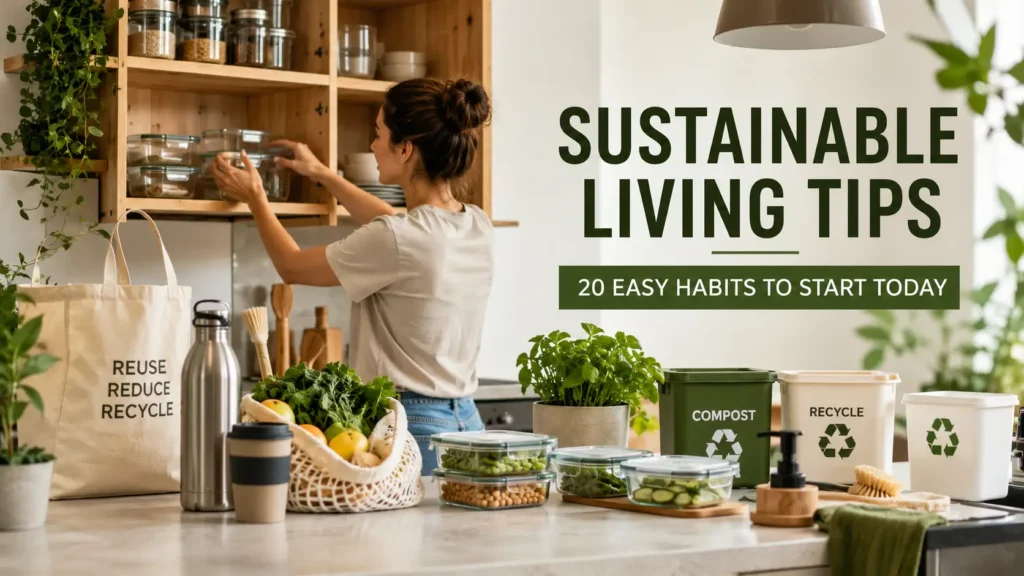
What “Sustainable Living” Actually Means (and What It Doesn’t)
Sustainable living simply means making choices that reduce your negative impact on the environment using fewer resources, creating less waste, and supporting practices that can be maintained long-term without depleting the planet.
Here’s what it’s not:
- It’s not zero waste or nothing.
- It’s not buying a brand-new “eco” product for every item you own.
- It’s not a moral test you either pass or fail.
According to the EPA, small household changes like reducing food waste and conserving energy collectively make a measurable dent in national greenhouse gas emissions. You don’t need perfection. You need consistency.
Kitchen & Food Habits
The kitchen is one of the easiest places to start, since food waste is one of the biggest and most fixable sources of household environmental impact.
- Meal plan weekly to buy only what you’ll use.
- Store produce properly (most food waste happens from things going bad before you get to them).
- Switch to reusable containers instead of single-use plastic wrap or bags.
- Buy local and seasonal produce when possible it typically travels shorter distances and supports regional farms.
Bathroom Waste Reduction
This is where I saw the biggest surprise. Switching to a bar shampoo and bar soap felt like a minor change, but it eliminated dozens of plastic bottles a year from our household with zero extra effort no new routine to learn, no habit to build. It’s one of those rare swaps that’s genuinely easier than the thing it replaces.
Other easy bathroom swaps:
- Bamboo toothbrushes instead of plastic
- Refillable deodorant or lotion containers
- Reusable cotton rounds instead of disposable ones
Home Energy & Water Habits
Energy and water habits quietly save money while cutting your footprint:
- Unplug devices and chargers when not in use (phantom energy use adds up)
- Switch to LED bulbs
- Take shorter showers
- Wash clothes in cold water when possible
Cheap Eco Swaps: Budget Comparison Table
One of the biggest myths about sustainable living is that it’s expensive. In many cases, it’s the opposite reusable items pay for themselves within months.
| Disposable Item | Reusable Swap | Approx. Annual Savings |
|---|---|---|
| Paper towels | Cloth rags/towels | $50–80 |
| Plastic water bottles | Reusable water bottle | $100–200 |
| Disposable razors | Safety razor | $40–60 |
| Plastic sandwich bags | Reusable silicone bags | $20–30 |
| Bottled shampoo/conditioner | Bar shampoo/conditioner | $30–50 |
Shopping & Consumption Habits
- Buy secondhand first for clothing, furniture, and kids’ items.
- Build a capsule wardrobe of versatile, durable pieces instead of chasing trends.
- Avoid fast fashion where possible look for brands with transparent supply chains.
Daily Waste Reduction Tips
- Start composting food scraps even a small countertop bin works in an apartment.
- Learn your local recycling rules contamination (wrong items in the bin) causes entire batches to be landfilled.
- Swap single-use plastics (straws, cutlery, bags) for reusable versions you keep on hand.
DIY Eco Alternatives
Simple DIY swaps that take five minutes and cost pennies:
| DIY Recipe | Difficulty | Cost vs. Store-Bought |
|---|---|---|
| All-purpose cleaner (vinegar + water + citrus peel) | Easy | ~70% cheaper |
| Dish soap (castile soap + water) | Easy | ~50% cheaper |
| Laundry detergent (soap flakes + washing soda) | Moderate | ~40% cheaper |
Transportation & Commuting Choices
- Walk or bike for short trips when possible
- Carpool or use public transit
- If you work remotely even part-time, that alone meaningfully cuts commuting emissions
Building Sustainable Habits That Stick
Here’s my honest mistake: when I started, I tried to change everything at once food, bathroom, cleaning products, transportation all in the same month. I burned out within weeks and quietly slid back into old habits.
What actually worked the second time around:
- Habit-stack: attach one new habit to an existing routine (e.g., meal plan the same day you grocery shop).
- Track loosely: a simple checklist, not a guilt tracker.
- Expect imperfection: missing a week doesn’t erase progress.
20 Habits Ranked by Ease, Cost, and Impact
| Habit | Ease | Cost to Start | Impact |
|---|---|---|---|
| Meal planning | Easy | Free | High |
| Reusable water bottle | Easy | Low | High |
| Bar soap/shampoo | Easy | Low | Medium |
| Composting | Moderate | Low | High |
| LED bulbs | Easy | Low | Medium |
| Secondhand shopping | Easy | Free | Medium |
| DIY cleaners | Moderate | Very low | Medium |
| Biking/walking | Moderate | Free | High |
| Cold water laundry | Easy | Free | Medium |
| Reusable bags | Easy | Low | Low |
(Full 20-habit list expands each category above.)
Common Beginner Mistakes to Avoid
- Overspending on “green” products before using up what you already own
- Trying to do everything at once (see above I learned this the hard way)
- Perfectionism treating one non-sustainable choice as a failure
- Ignoring the free options (borrowing, repairing, using less) in favor of buying new “eco” items
FAQ: Sustainable Living Tips for Beginners
How do I start sustainable living on a budget?
Start with free or low-cost habits first meal planning, using what you already own, and borrowing before buying. Reusable swaps pay for themselves over time.
What is the easiest sustainable habit for beginners?
Most beginners find reusable water bottles, bar soap, and meal planning the easiest starting points since they require little behavior change.
Do small sustainable habits actually make a difference?
Yes. Collectively, household-level changes in energy use, food waste, and consumption contribute meaningfully to reducing environmental impact, according to EPA data on household emissions.
How long does it take to build sustainable habits?
Most people see habits stick within 2–3 months when introduced one at a time rather than all at once.
Is sustainable living more expensive?
Not usually. While some products have a higher upfront cost, most sustainable swaps reduce spending over a year.
Final Thoughts
Sustainable living tips for beginners work best when they’re realistic, not rigid. Start with one habit maybe a bathroom swap, maybe a kitchen one and build from there. For more specific starting points, check out our guides on Cheap Eco Swaps, DIY Eco Alternatives, and Bathroom Waste Reduction.
Small, consistent changes beat short-lived perfection every time.
How to Be More Sustainable: 20 Sustainable Living Ideas
I want to come back to something I mentioned earlier, because it’s the part most guides skip: my first attempt at “going sustainable” failed. Not because the habits were wrong, but because I tried to install all of them at once, like flipping a switch on my entire life. Three weeks in, I was exhausted, resentful, and back to buying paper towels in bulk. The second attempt worked because I stopped treating sustainability as a project with a finish line and started treating it as a rotation of small, boring maintenance tasks the same way you’d build a fitness habit or a savings habit.
Pick One Habit This Week
If you’re not sure where to start, go back to the budget comparison table above and pick whichever swap costs you the least to try. For most people, that’s a reusable water bottle or switching to bar soap both take zero new skills and save money almost immediately. Momentum matters more than magnitude. A single kept habit beats five abandoned ones.
Let Go of the “All or Nothing” Trap
One thing I’d tell my past self: you will still buy something in plastic packaging sometimes. You will forget your reusable bags occasionally. That doesn’t undo the composting bin, the bar shampoo, or the meal planning you’ve already built into your week. Sustainable living isn’t a purity test it’s a direction, not a destination.
Where to Go From Here
Once one habit feels automatic, that’s your cue to add the next one. Habit-stacking works because it borrows momentum from something you already do without thinking. For a deeper dive, our related guides on Cheap Eco Swaps, DIY Eco Alternatives, and Bathroom Waste Reduction break each area down further.
But if you close this tab and remember only one thing, let it be this: small, consistent changes beat short-lived perfection every time. Start with one habit this week. Let it get boring. Then add the next one.